
Property & Acquisition Loan Rollups
A property doesn't carry its own loan figures — it inherits them from the loans secured against it. This reference explains every loan number that rolls up onto a property's Debt Summary and onto the Acquisition deal behind it: what each figure means, its formula in plain words, which records feed it, and how to reconcile it by hand. By the end you'll be able to read any property- or acquisition-level loan number and know exactly where it came from. The loan-level figures on the loan record itself are covered in Escrow & Principal Balances; this article is the property and acquisition view.
Access you'll need. Viewing these figures needs any set with read access to Properties and Opportunities, such as REDA - Master Data - Read Only; working the underlying loans, payments, and tickets requires REDA - Property Lending User. Every figure here is system-maintained — nobody edits them directly.
The mental model
Two ideas make all of these numbers click into place.
First, property-level figures are rollups of the property's loans — and only active loans count. A loan is active when it's at Funded, Payoff Pending, or Closed Won (see Loans in REDA). A loan still at Prospecting or Pending contributes nothing to the property totals yet.
Second, the property and the loan measure escrow from different starting points. The property's debt and escrow figures start from the committed loan amount — the full Total Loan Amount. A single loan's own escrow, by contrast, starts from the principal actually received. So the property and the loan can show different escrow until the lender has funded the loan in full. Keep that difference in mind; it's the source of most "why don't these match?" questions.
One more thing you'll notice on new properties: when a property is created from an Acquisition deal, REDA automatically starts a placeholder loan for it — a Lending deal at Prospecting, with the purchase's buying account already filled in as the borrower. Because it's still at Prospecting, it contributes nothing to the Debt Summary yet; the totals stay at zero until that loan is worked up to Funded. So a brand-new property showing a loan in its list but a zero Total Loan Amount is behaving exactly as expected.
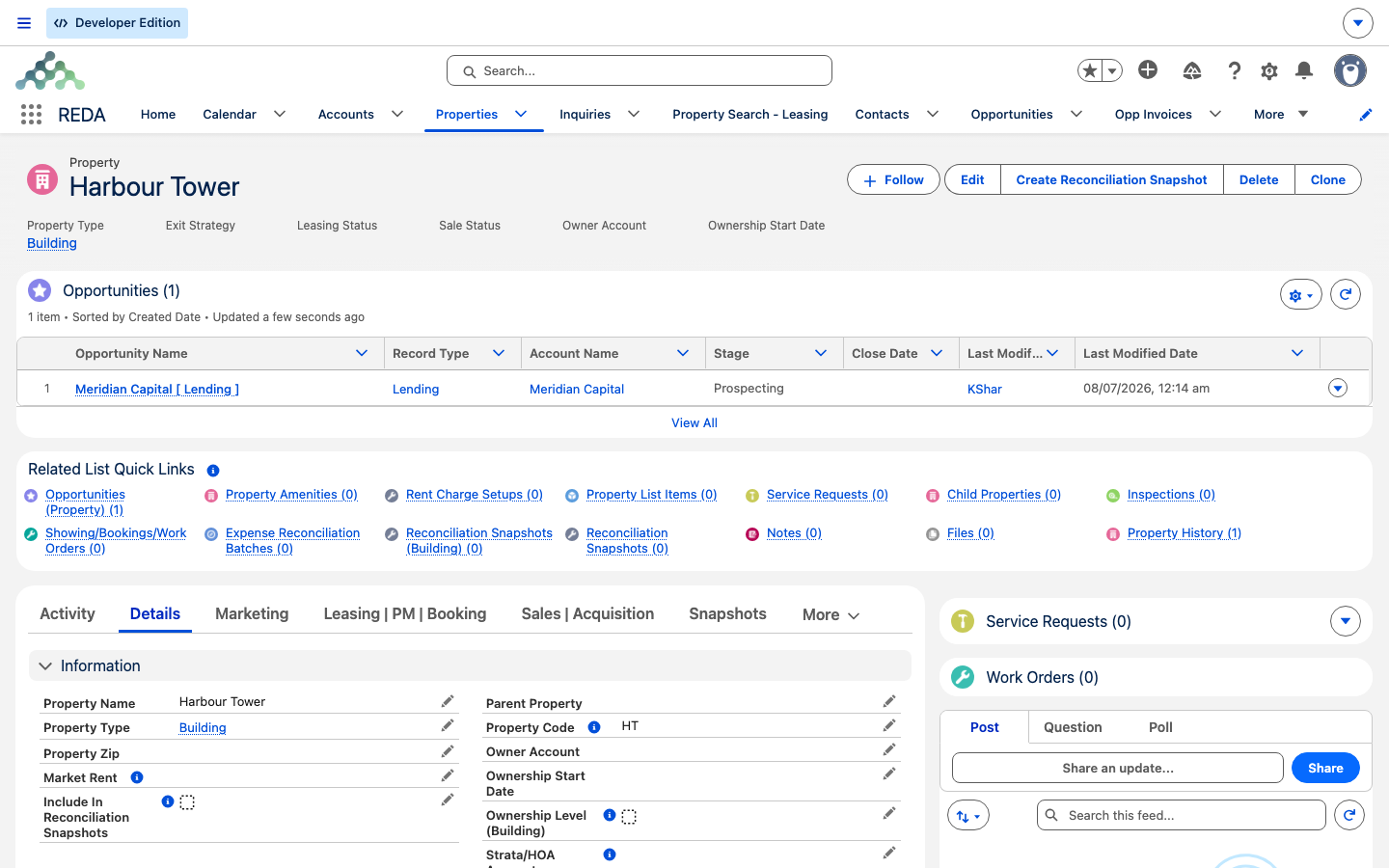
The property Debt Summary
These figures live on the property, summed across its active loans. Each one, with its formula in words:
The property also enforces its own cap on disbursed money — it can't exceed the loan amount:
The two "balance" figures, and the two "escrows"
Two pairs of names collide, so be precise every time.
| Question | Property-level figure | Loan-level figure (see Escrow & Principal Balances) |
|---|---|---|
| How much is still owed? | Net Loan Balance | Loan Principal Balance |
| How much loan money is still in escrow? | Running Escrow (property) | Running Escrow (loan) |
| Starting point | Committed (Total Loan Amount) | Received (Received Principal) |
Net Loan Balance is a property figure summed across all active loans; Loan Principal Balance is a single loan's outstanding principal. Don't conflate them. And Running Escrow exists at both levels with different inputs — always qualify it as "(property)" or "(loan)."
The acquisition's loan figures
A funded Acquisition deal shows two loan-related numbers.
The committed loan amount is rolled up from the acquisition's linked active loans — the allotted and loan amounts committed against that purchase. Read it as "how much loan is committed against this acquisition."
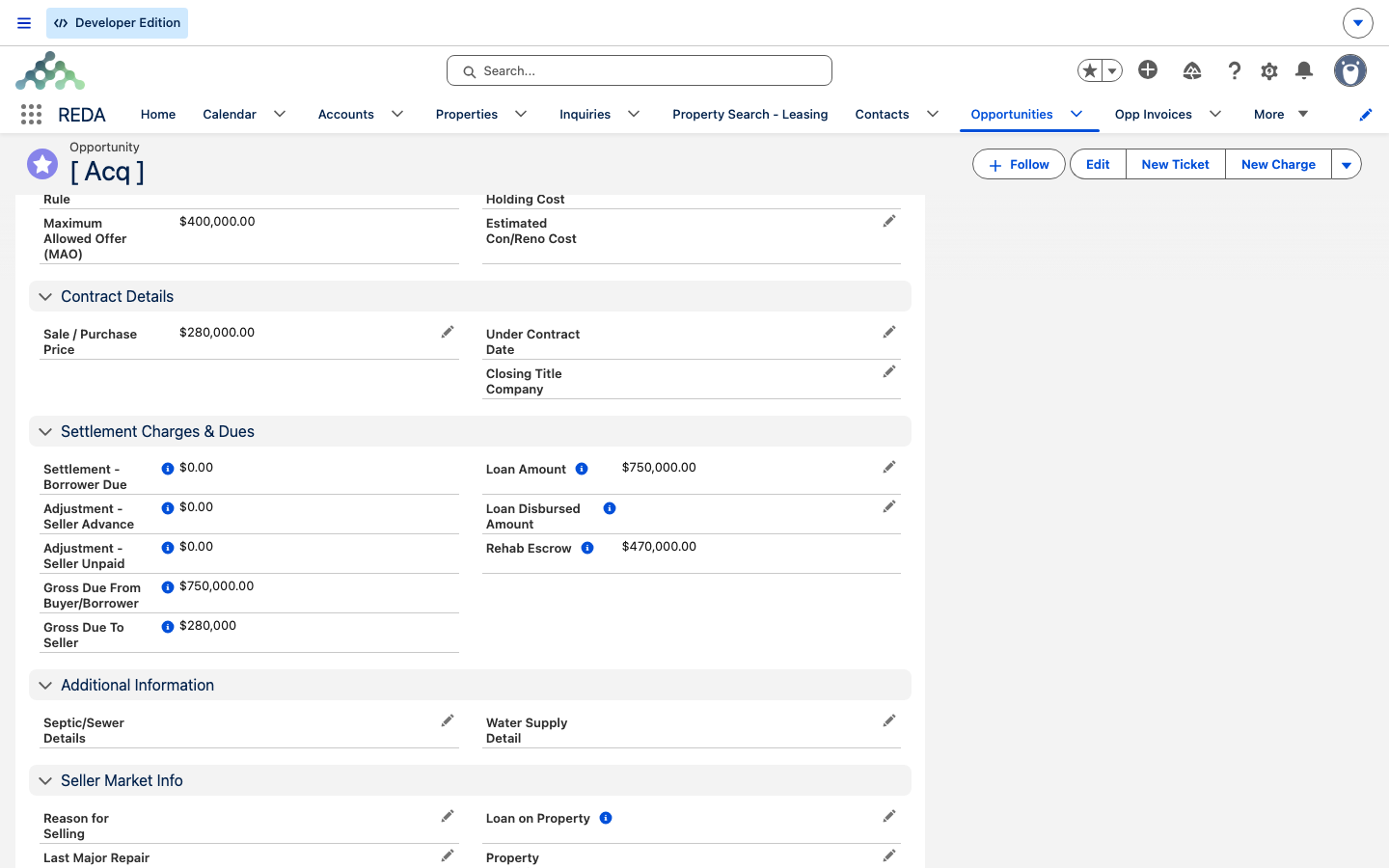
The odd one out is Rehab Escrow, which lives on the Acquisition deal (not the property or the loan) because it depends on that deal's settlement figures. When a loan amount exists, it's:
Loan Amount − Sale / Purchase Price − Settlement Borrower Due − Seller Advance + Seller Unpaid
and it's 0 when there's no loan. It represents the renovation holdback left over after closing costs — the loan money set aside for rehab once the purchase is settled.
What counts, and when
Every figure above depends on records reaching a particular state first. The three gates, in one place:
| Record | Counts only when |
|---|---|
| A loan (in property / acquisition totals) | Active: Funded, Payoff Pending, or Closed Won |
| A Loan Payment | Is Completed is checked (with Payment Date + Reference) |
| A Disbursement or Payoff ticket | Status is Closed |
Worked reconciliation: Harbour Tower
Take the 500,000.00 loan on Harbour Tower, after the events from the sibling articles: it's Funded with Received Principal 500,000.00, a curtailment paid 50,000.00 of principal, a monthly interest of 3,750.00 recorded, and one Closed renovation draw of 80,000.00. Treating it as the single loan on the property, here's how the Debt Summary reconciles:
| Figure | Working | Result |
|---|---|---|
| Total Loan Amount | The one active loan's amount | 500,000.00 |
| Total Loan Disbursement Amount | The Closed 80,000.00 draw | 80,000.00 |
| Total Loan Principal Paid | The 50,000.00 curtailment | 50,000.00 |
| Net Loan Balance | 500,000.00 − 50,000.00 − 0 | 450,000.00 |
| Running Escrow (property) | 500,000.00 − 80,000.00 − 0 | 420,000.00 |
And on Harbour Tower's Acquisition deal, with a loan of 500,000.00, a purchase price of 280,000.00, a Settlement Borrower Due of 30,000.00, a Seller Advance of 2,000.00, and a Seller Unpaid of 5,000.00, the Rehab Escrow is:
500,000.00 − 280,000.00 − 30,000.00 − 2,000.00 + 5,000.00 = 193,000.00 renovation holdback.
Reference: every rollup figure
| Figure | Level | Formula in words | Fed by |
|---|---|---|---|
| Total Loan Amount | Property | Sum of Loan Amount across the property's active loans | Active loans |
| Total Loan Disbursement Amount | Property | Sum of Closed disbursement tickets on the property | Disbursement tickets |
| Total Loan Principal Paid | Property | Sum of principal paid across the property's loans | Completed Loan Payments |
| Total Loan Principal Payoff (Received) | Property | Payoff inflow summed across the property's loans | Closed payoff tickets |
| Total Loan Principal Payoff (Disbursed) | Property | Payoff outflow summed across the property's loans | Closed payoff tickets |
| Net Loan Balance | Property | Total Loan Amount − Total Loan Principal Paid − Total Loan Principal Payoff (Received) | The above |
| Running Escrow (property) | Property | Total Loan Amount − Total Loan Disbursement Amount − Total Loan Principal Payoff (Disbursed) | The above |
| Committed loan amount | Acquisition | Sum of allotted / loan amounts from the acquisition's linked active loans | Active loans |
| Rehab Escrow | Acquisition | Loan Amount − Sale / Purchase Price − Settlement Borrower Due − Seller Advance + Seller Unpaid (0 when no loan) | Loan + settlement statement |
Where to go next
- Escrow & Principal Balances — the loan-level figures (Loan Principal Balance, Running Escrow on the loan) in words.
- Recording Loan Payments — the completed payments that feed Total Loan Principal Paid.
- Disbursements & Payoffs — the Closed tickets that feed disbursement and payoff totals.
- Loan Terms & Allocation — the Loan Amount and allotted amounts these rollups start from.
- Loans in REDA — what "active" means and how a loan reaches it.
Frequently asked questions
Net Loan Balance is a property total, summed across all its active loans. Loan Principal Balance is a single loan's outstanding principal. The property figure can span several loans; the loan figure is just that one loan.
They start from different points. The property's Running Escrow starts from the committed Total Loan Amount; a loan's Running Escrow starts from the principal actually received. Until a loan is fully funded, the two differ.
No — every figure here is system-maintained. To change a number, correct the underlying loan, payment, or ticket, and the rollups follow.
Loans count while active, and Closed Won still counts as active. Whether to leave a fully paid loan at Closed Won or move it to a stage that no longer counts is a business-practice choice — decide it consistently and set the loan's final stage accordingly.
It's the post-closing renovation holdback — the loan money left after closing costs (Loan Amount minus the price and settlement adjustments). It sits on the Acquisition deal because it's computed from that deal's settlement figures.
The property caps disbursed money at the loan amount: "Loan Disbursed Amount can not be greater than Loan Amount." You can't draw out more than the loan is for.
Was this article helpful?